This site is shared with project stakeholders for discussion purposes. Enter the access code to continue.
Need access? Contact [email protected]
Phased Development Plan
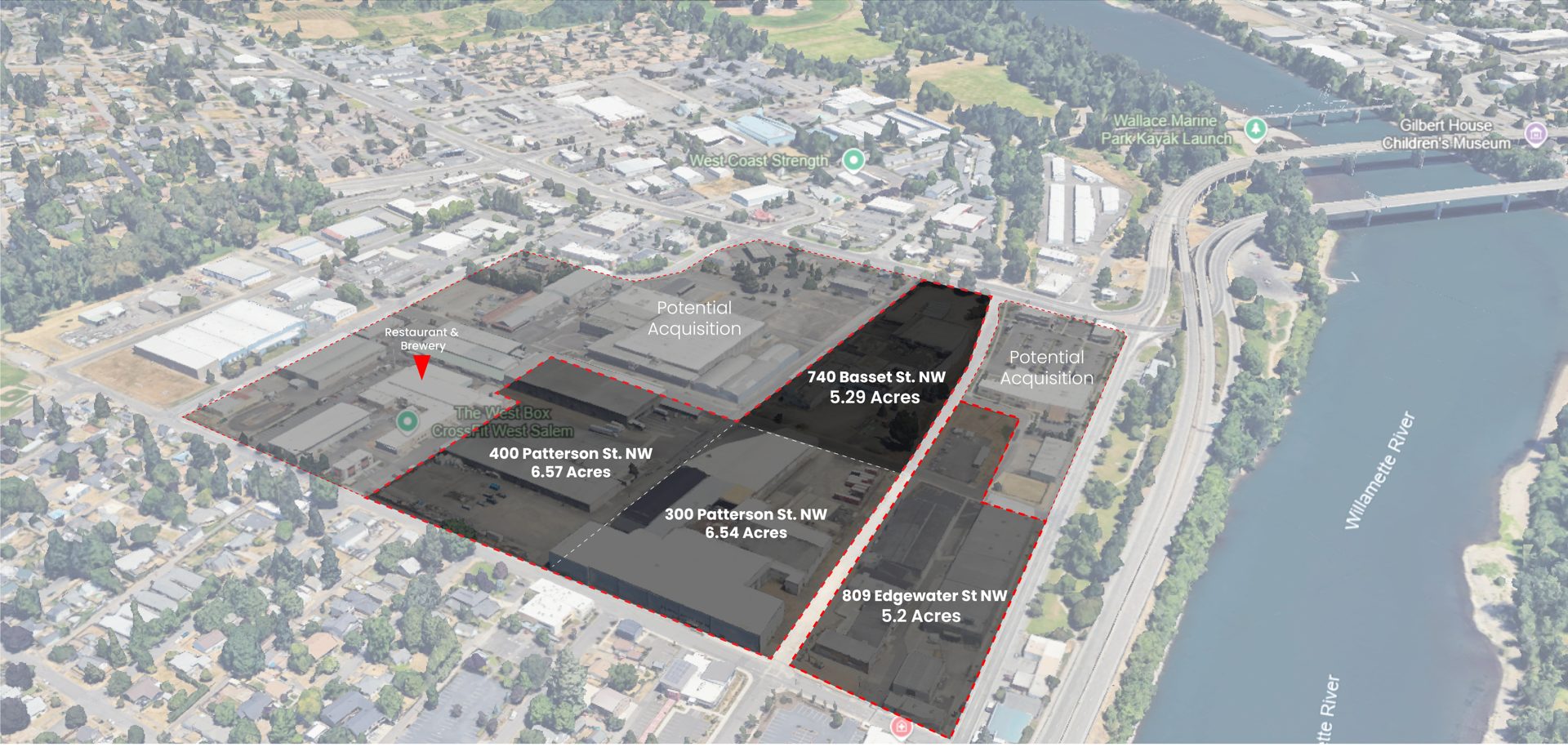
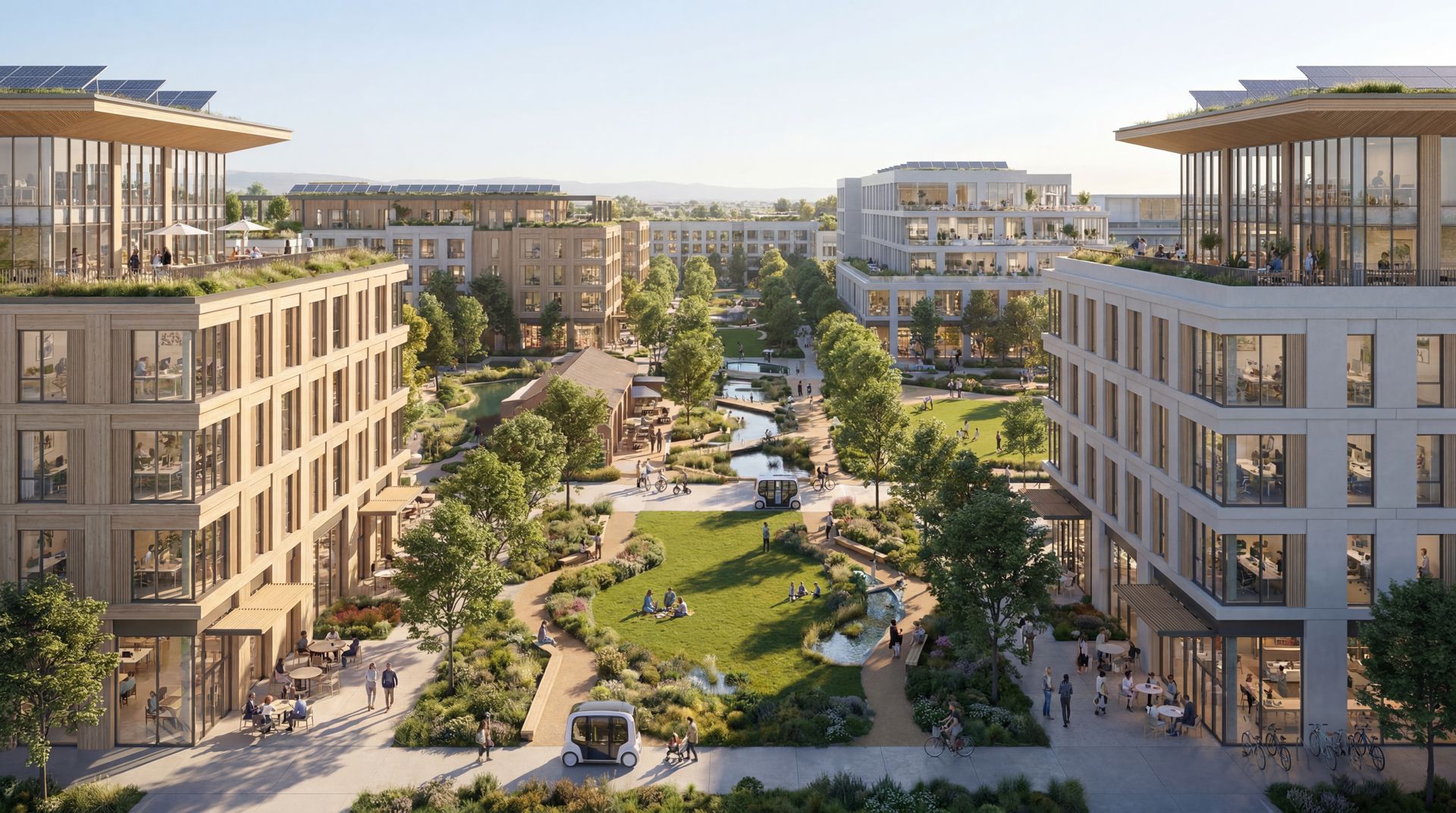
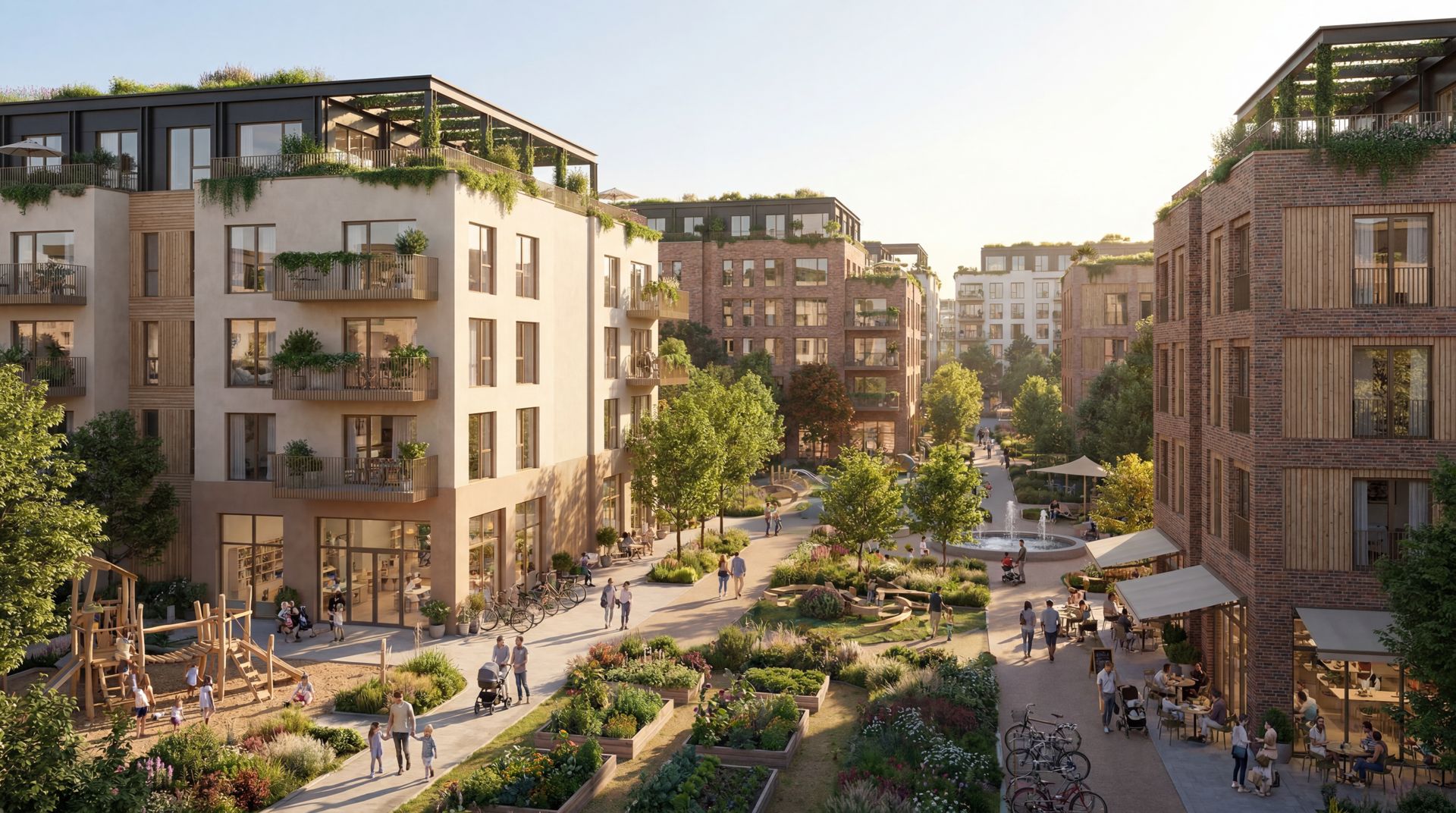
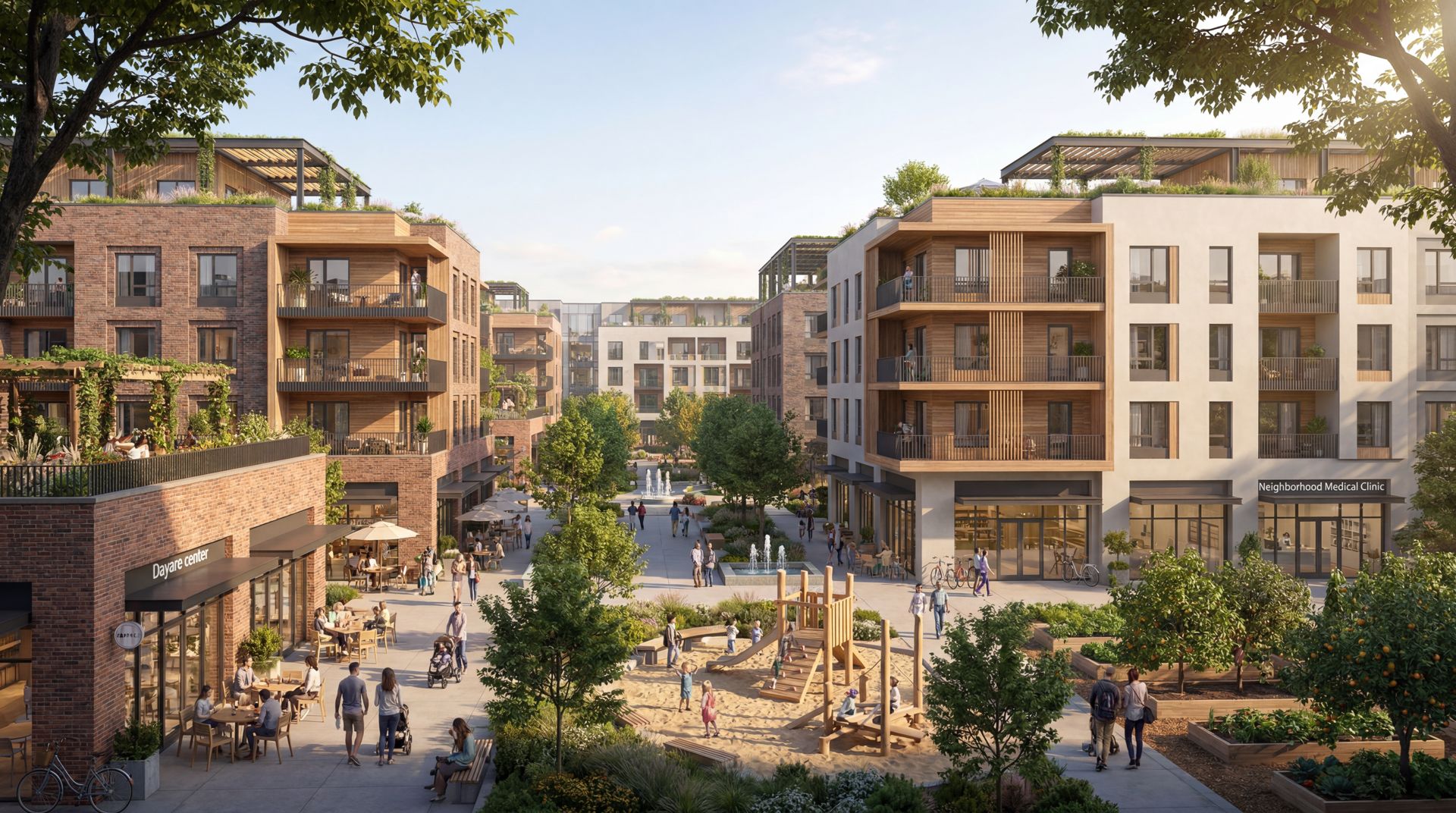
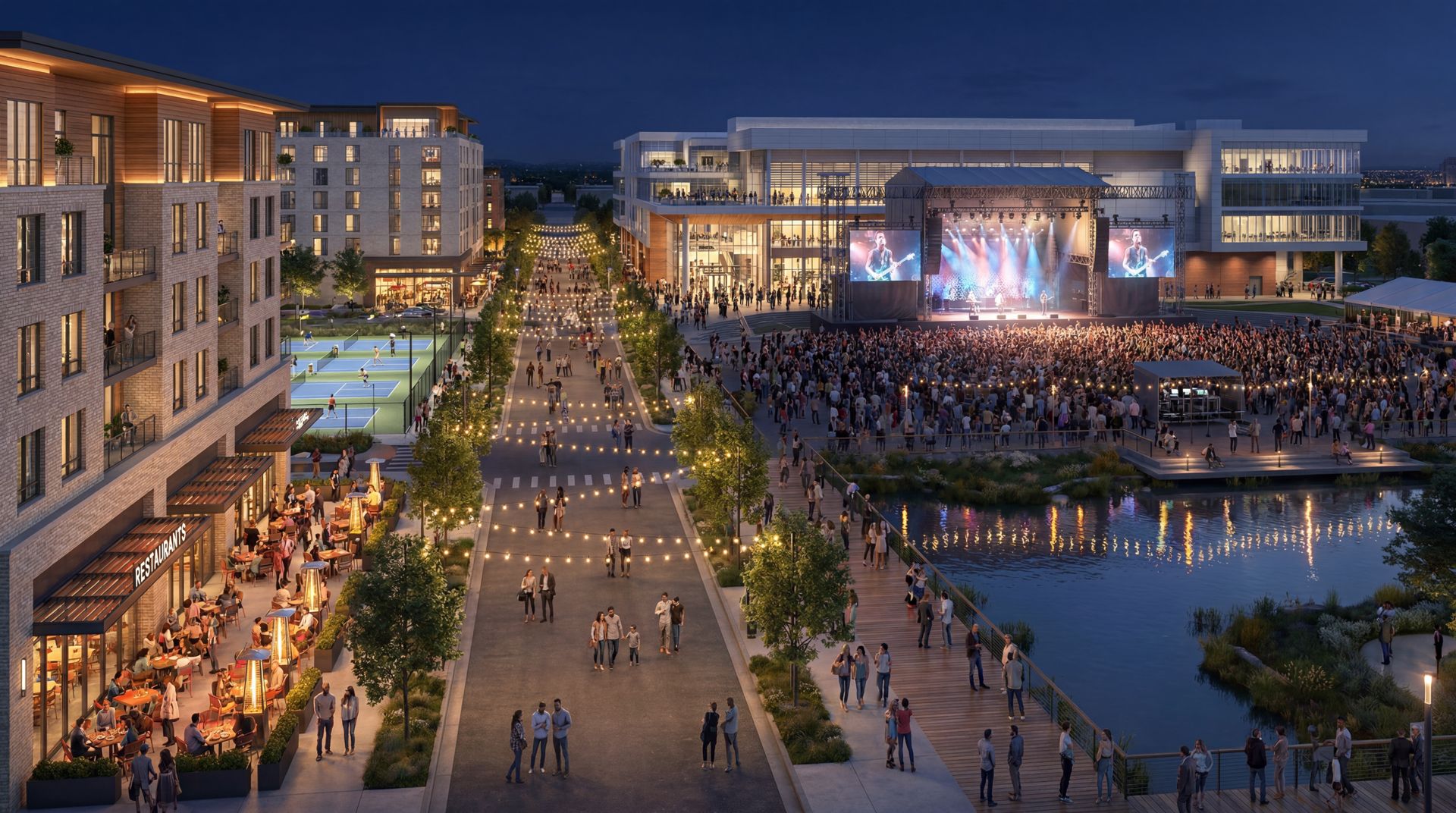
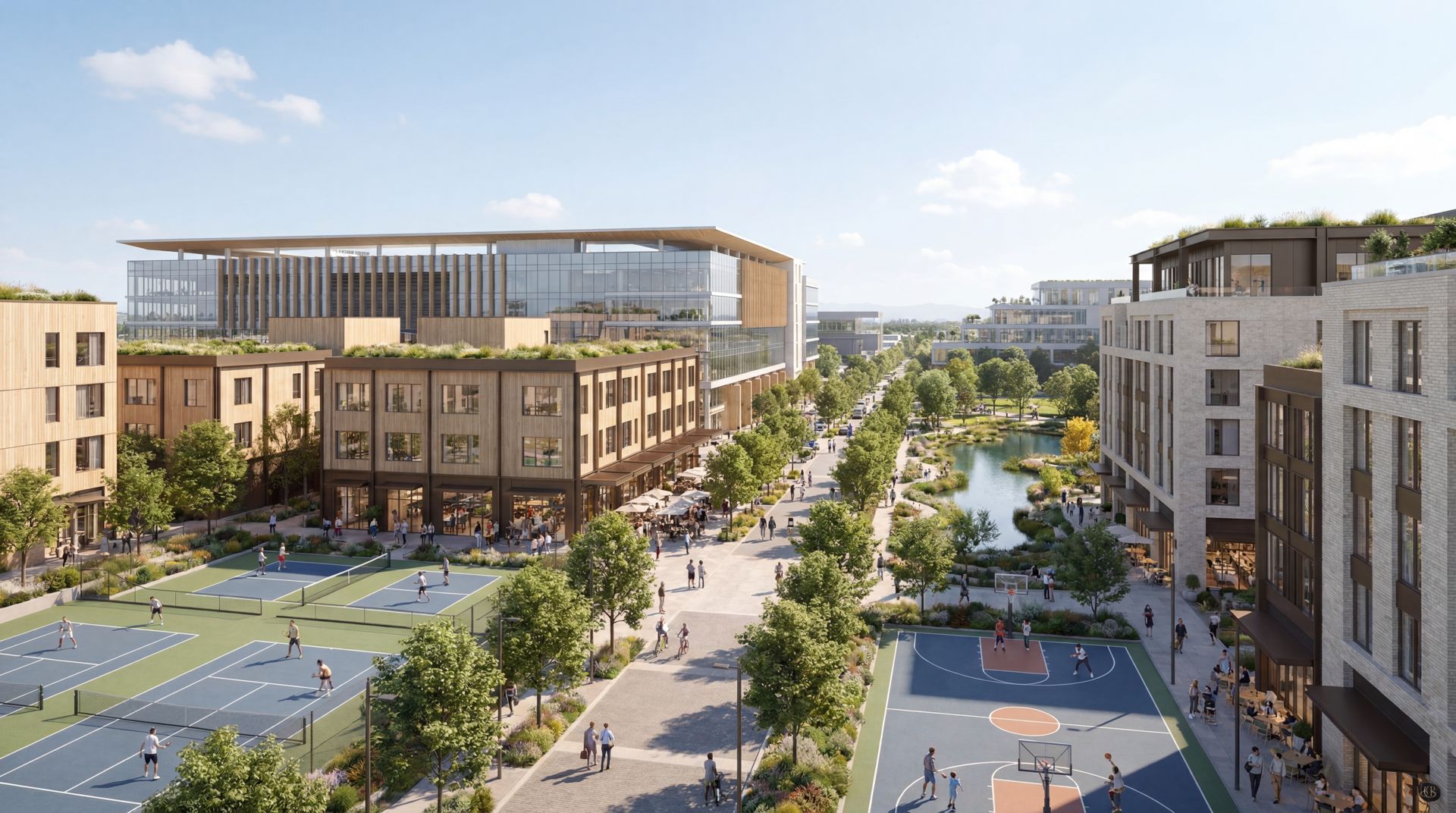
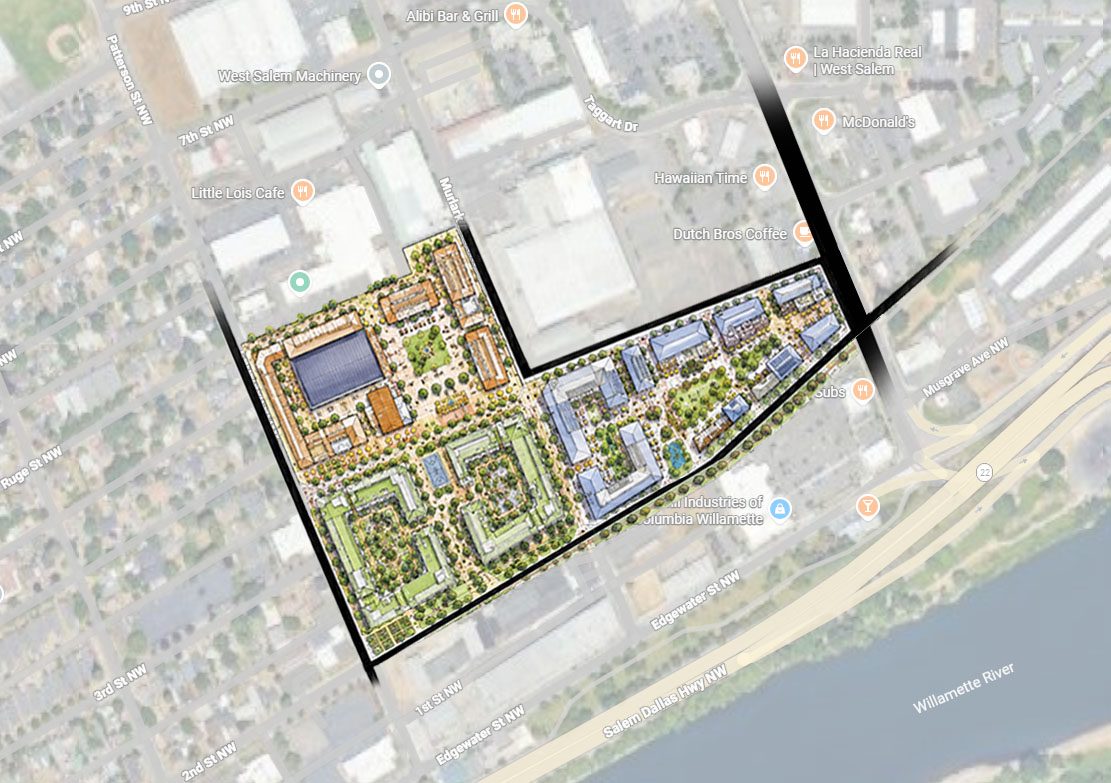
Create an ~22-acre mixed-use river-adjacent district that combines housing, retail, entertainment, hospitality, work space and community amenities into a walkable neighborhood destination for West Salem.
Now City acts as the district's master developer: assembling and entitling the land, master-planning the whole, and building the infrastructure and public realm that turn a fragmented corridor into a coherent neighborhood. The intent is to vertically develop and hold the phases as a long-term owner-operator, with the flexibility on any parcel to build and hold, form a joint venture, or bring in a best-in-class specialist builder under the master plan. The phased approach minimizes upfront risk, creates early value, generates interim cash flow, and compounds long-term value, including for Opportunity Zone–eligible capital.
The district's economics are built on assembly and value creation: modest platform capital secures the land and funds the work that turns a fragmented 22-acre corridor into an entitled, shovel-ready development pipeline.
Illustrative district-scale figures, company underwriting (June 2026). Build-out is targeted complete across all four phases in Year 8, with the final phase stabilizing ahead of Year 10, so the district earns income years before it is finished. Phase-level economics are detailed by phase below and in the underwriting model.
An incrementally phased district anchored by an innovation and residential catalyst, expanding into family neighborhoods, a sports & entertainment destination, and river-adjacent value creation.


In Salem, Oregon, the under-appreciated capital, Now City is catalyzing the transformation of an aging light-industrial corridor into a high-density, mixed-use innovation and entertainment district. The City has already rezoned the area to support this shift, creating a rare window where land use, policy, and market momentum are aligned.
Full market context, evidence, and sources are in the District Capitalization.
The Sponsors intend to contribute the 5.29-acre catalyst parcel at 740 Bassett, and its appraised land value, as project equity, across both Phase One development and district land assembly. Contributing the catalyst site rather than buying it lets Phase One proceed from a position of site control while preserving capital for entitlement and vertical development.
The letter of intent is fully executed, with definitive joint-venture agreements to follow. The structure lets Phase One proceed from a position of site control while preserving capital for entitlement and vertical development.
Land contribution becomes effective upon:
Rather than acquiring all parcels immediately, Now City will first secure site control, complete due diligence, and entitle the district. This approach reduces risk while preserving flexibility across multiple financing and acquisition pathways.
A lease-to-own adaptive reuse layer sits inside Phase 0 rather than competing with the 10-year plan. The 300 Patterson Middle Property and 400 Patterson Bow Truss Buildings can create immediate operating identity, tenant demand, community support, and revenue while Phase One and the long-term ground-up phases proceed.
Objective: Secure control of the full district while minimizing acquisition capital requirements and preserving flexibility.
Phase One parcel · 740 Bassett St NW · Sponsor-contributed equity
District parcel · 300 Patterson St NW · single owner
District parcel · 400 Patterson St NW · single owner, listed
District parcel · 809 Edgewater St NW · single owner
For the 300 and 400 Patterson buildings, add code consultant review for occupancy changes, fire/life-safety upgrades, seismic/structural review of the bow truss buildings, MEP and sprinkler capacity, parking/circulation, environmental conditions, existing leases, and cost-to-activate versus cost-to-convert.
Objective: Turn the district on before vertical construction - generating interim cash flow, proving demand, and building the operating track record that de-risks every later phase. Activation is the operating prototype for the full district, not a separate project.
Continuing existing leases preserves cash flow and offsets carrying costs through entitlement, while live demand - tenant waitlists, sales, foot traffic - validates the program that a lender or buyer will later underwrite.
Activation establishes the Now City brand on site, builds community and political support ahead of entitlement, and seeds the tenant pipeline that fills the permanent ground floors.
Operating income supports the lease-option economics and helps finance eventual acquisition, lowering the equity the district must carry before Phase 1 delivers.
Each activation is structured as an operating business (OpCo) paying lease income to the land-holding entity (PropCo). Activation revenue therefore appears in the district pro forma as tenant income that offsets carrying costs and builds an underwritable operating history. At full activation, the concepts together contribute on the order of $930K per year of lease income to the district.
Four concepts make up the interim layer, spanning the 300 Patterson (middle), 400 Patterson (bow-truss), and 809 Edgewater parcels. Each carries its own business model, implementation plan, and operating partnerships.
A daily civic marketplace on the Wallace Road frontage - the durable anchor and the leasing pipeline for permanent retail.
Raw, high-ceiling lofts in the 400 Patterson bow-truss buildings - income from day one and demand proof for housing.
A community recreation pilot that de-risks the permanent Phase 3 sports and entertainment facility.
Galleries, studios, markets, and riverfront programming at 809 Edgewater and 300 Patterson, building cultural identity.
Now City earns as the district's master developer across four layers: the land value created by assembly and entitlement, the monetization of finished pads through hold, joint venture, or sale, the margin from vertically developing the phases it builds, and the long-term yield from holding stabilized assets. Because pad-level joint ventures and sales recycle capital into later phases, the platform funds much of its own build-out and lowers peak equity.
The capital plan begins with the Phase One Capital Campaign: $15M across two vehicles raising simultaneously, the $3M Now City Platform (the company that delivers districts) and the $12M District Value Creation Fund (site control, entitlement, and engineering). The land close (~$34M, including the $5M sponsor contribution under the fully executed LOI) and phase-level project capital follow. The full structure, stakeholder doors, and exit timeline live on District Capitalization.
Potential partners:
Benefits:
Applicable primarily to residential phases. Benefits:
Combination of:
This is likely the most flexible and resilient capital structure.
About $50M of platform capital, the $15M dual-vehicle campaign plus the ~$34M land close (including the Sponsors’ $5M contribution under the executed LOI), secures and entitles the full 22-acre district, unlocking a ~$650M development pipeline and an estimated ~$1.0B of stabilized value across roughly a decade. The full value-creation curve is shown in the Vision above and detailed on District Value Creation; the rolling liquidity windows (Y4 / Y6 / Y8, optional Y10+ OZ hold) are on District Capitalization, with full return detail in the Upside Explorer.
The build-out goal: construction complete across all four phases in Year 8, with the final phase stabilizing ahead of Year 10. Stabilization rolls phase by phase along the way, so the district is earning income years before it is finished.
Phase One Parcel · 740 Bassett St NW · 5.29 Acres
Use operating data, tenant demand, event attendance, sports/wellness utilization, and tenant waitlists from West Salem Works to support Phase 1 financing, leasing, residential absorption, and public-sector confidence.
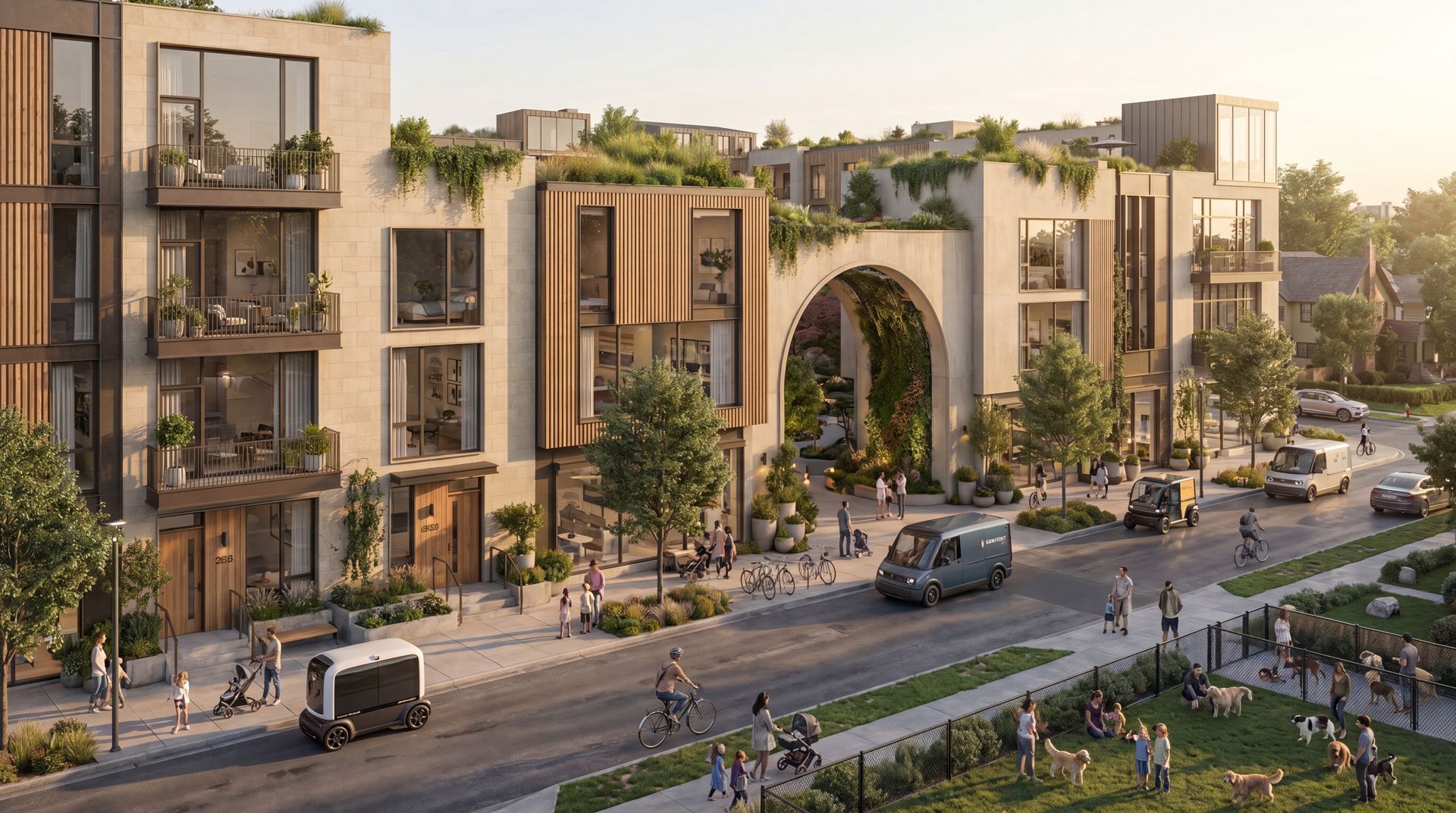
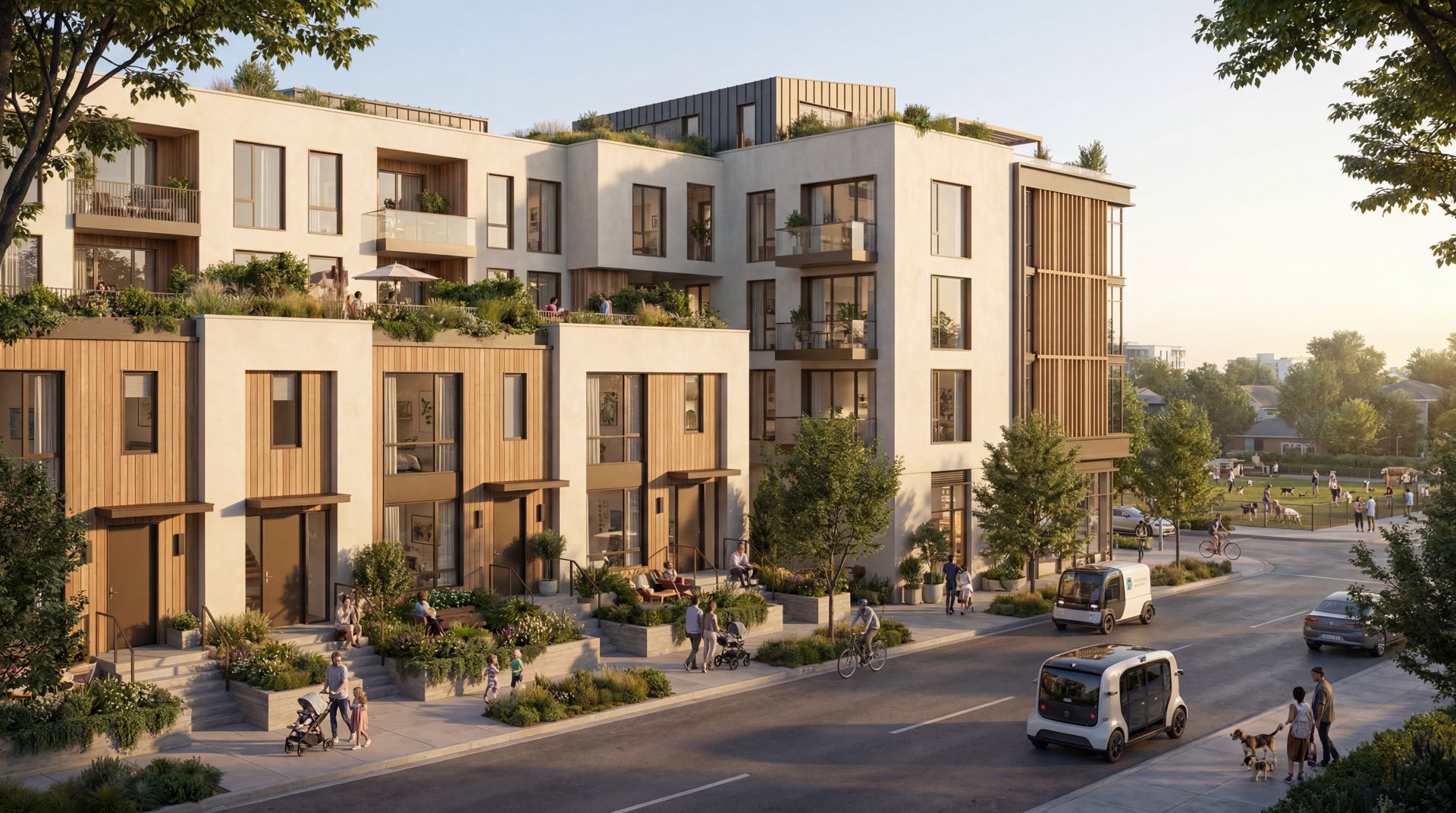
Ground-floor townhouse units become a signature housing product throughout the district, with multifamily apartments located above.
Features
Benefits

District Parcel · 300 Patterson St NW · 6.50 Acres
Pre-development begins as Phase 1 tops out - construction overlaps Phase 1 lease-up.
Phase 2 should be informed by measured demand from Phase 0B and Phase 1, including tenant waitlists, live-work interest, daycare/clinic demand, food and retail sales, and family-oriented public realm usage.


District Parcel · 400 Patterson St NW · 6.50 Acres
Pre-development begins as Phase 2 starts construction - the destination phase rides proven residential demand.
De-risk the permanent sports and recreation facility by piloting pickleball, padel, fitness, wellness, indoor recreation, youth sports, events, and tournaments in the 400 Patterson Bow Truss Buildings during Phase 0B.
District Parcel · 809 Edgewater St NW · 3.9 Acres
The final phase: ~100 river-adjacent residences with riverfront F&B and gallery space, delivered into a matured district.
Phase 0B activation should track occupied adaptive reuse square footage, operating revenue, event attendance, memberships, court utilization, tenant waitlists, community partners, and letters of intent from future retail, sports, wellness, and innovation operators.
AI-native development, advanced modeling, data intelligence, automation, and modern delivery methods reduce design friction, compress timelines, lower soft costs, and provide the reporting backbone institutional capital now requires.
Wellness, prosperity, and ecology data-driven community design.
Modern methods that reduce cost, shorten schedules & minimize waste.
Integrated energy, water & mobility systems that cut OpEx & boost resilience.
Stacked incentives + carbon & brand capital to enhance returns.
Underwriting reflects a conservative base case. In pre-development, these strategies are activated to improve returns for GPs and LPs, deliver superior outcomes for residents and stakeholders, and position the district to attract corporate partners and long-term owner-operators such as pension funds.
Now City intends to develop and hold the district as a long-term owner-operator. Because stabilization rolls phase by phase, liquidity comes through recapitalizations and refinancings that return capital while Now City keeps ownership, with a sale or a parcel-level joint venture available as an optional lever rather than the plan.
Four windows open in sequence: a Phase 1 recapitalization around Year 4, a stabilized residential portfolio around Year 6, district completion around Year 8, and an optional extended Opportunity Zone hold at Year 10+ for the basis step-up. Each returns capital through refinance or recapitalization while the district is held, with an outright sale or a parcel-level joint venture optional.
The structure is compatible with a 10-year Opportunity Zone hold for OZ-eligible investors without making the project dependent on it - while creating a replicable Now City model for future communities.
A fully stabilized river-adjacent district that combines housing, retail, entertainment, hospitality, work space and community amenities while maximizing long-term value for landowners, investors, residents, and the broader West Salem community.
A place that people love.
Now City is the district's master developer: it assembles and entitles the land, master-plans the whole, and stewards the neighborhood over decades, supported by a growing bench of development, construction, infrastructure, and operating partners. This model lets individual phases be built by best-in-class regional and specialist builders with direct market knowledge, while Now City holds continuity of vision, performance standards, and long-term district control. As the platform scales, execution capacity scales with it, through joint ventures, operating partnerships, and institutional collaborators aligned with district-level outcomes.
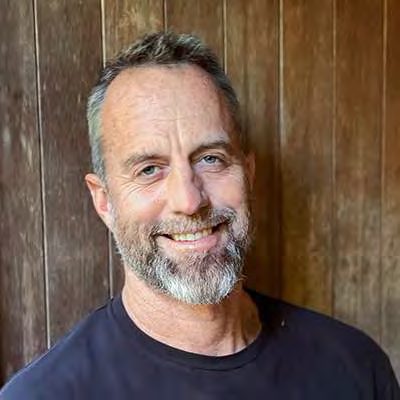
Erik is a systems thinker focused on aligning capital, design, and operations into development that is financially viable, operationally sound, and grounded in care. He brings 30 years of property operations and 20 years in technology, business development, and startup leadership.
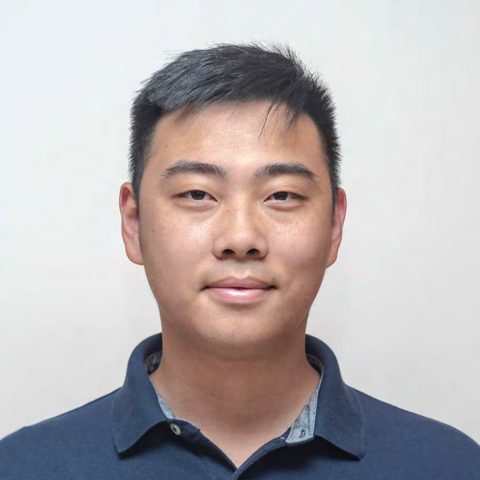
Ritchie leads design, development, and operations. B.Architecture from Carnegie Mellon, MS in Architecture and Urban Design from Columbia, MBA candidate at Johns Hopkins. Previously a mobility planner at Lyft in New York, where he led bike-share expansion, and later supported capital raise and development of a 1,000-unit multifamily mixed-use project in NYC.
We work with senior advisors whose expertise is directly load-bearing for the work.
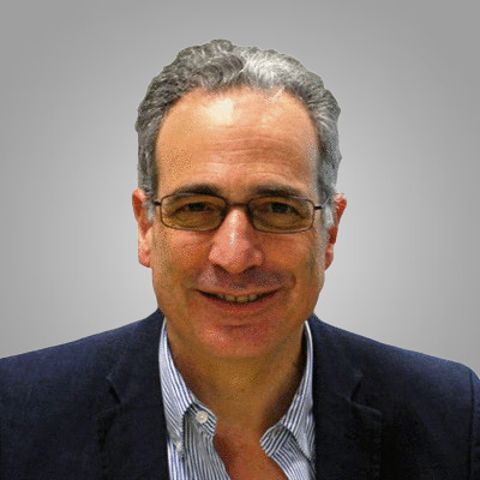
Michael is an economist, attorney, and one of the architects of the 2012 JOBS Act. Adjunct Professor at Bard Business School and author of Put Your Money Where Your Life Is, The Local Economy Solution, and others. He advises Now City on community-rooted ownership, local capital formation, and finance models that keep wealth in place.
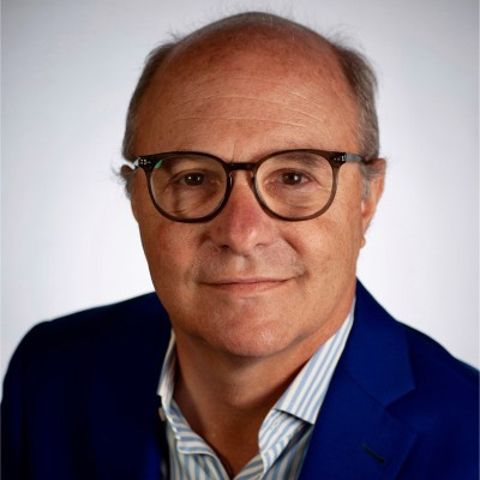
Neal, FAIA, FCNU, directs the western U.S. urban and architectural design practice at Torti Gallas. His work focuses on master plans, form-based codes, and the public realm - especially the revitalization of declining urban centers, brownfields, and aging suburbs. He advises Now City on urbanism, master planning, and entitlement strategy.