Now City Inc

Investor
Preview

This site is shared with prospective platform investors for discussion purposes. Enter the access code to continue.

Need access? Contact [email protected]

Now City Inc · Private Investor Preview

The district
is the product.

Now City is a master developer platform for regenerative districts, with a standardized building system to deliver them. The first district is under way. This raise builds the company that builds the rest.

$3.5M Platform Equity · C-Corp · Raising Now · For discussion purposes only
01The Opening

America needs districts. Almost nobody is set up to deliver them.

The country is short roughly four million homes, and the shortage is sharpest where people actually want to live: walkable, connected neighborhoods near jobs, nature, and daily life. Mid-sized cities hold the land, the zoning momentum, and the demand. What they are missing is the actor.

1

The demand is real

Oregon was the #1 inbound state in 2025 and Salem the #7 inbound US metro. Core-market vacancy under 2%. Renters paying 36-37% of income. The same pattern repeats across the mid-sized West.

2

The policy window is open

Cities have rezoned corridors for density, tax increment tools are proven, the Opportunity Zone program is now permanent, and single-stair mid-rise reform has opened across the West Coast.

3

The role is vacant

Merchant builders build one building and leave. Institutions arrive after de-risking. The master developer role, the actor who assembles, entitles, and stewards the whole, is unfilled in nearly every mid-sized market.

Now City exists to fill that role. We are a vertically integrated master developer and operator: we help communities unlock the value in underused land, treat the district as one living system, and steward the result for decades. The business is that districts built this way outperform, and the platform that can repeat them compounds.
02The Platform

One company, built to repeat the hardest role in real estate

A master developer earns across four layers: land value created by assembly and entitlement, pad monetization to phase partners, development margin on the phases it builds, and long-term yield on the district it holds. Now City's edge is that every layer runs on systems the company owns.

Layer 1 · Land value

Assembly, entitlement, and master planning turn fragmented parcels into an investable district. The step change in value accrues to positions the platform structures.

Layer 2 · Pad monetization

Finished, infrastructure-served parcels are held, joint-ventured, or delivered with phase partners, converting entitlement work into proceeds and aligned partnerships.

Layer 3 · Development margin

On phases Now City builds: development fees during delivery plus promote at stabilization, underwritten live in the Upside Explorer.

Layer 4 · Long-term yield

The stabilized district is held as owner-operator and recapitalized rather than sold, compounding value for the long term.

Four systems the platform owns

Each is real today, in use on the first district, and built to transfer to every district that follows.

Software · nowcity.ai

Now City Upside Explorer

A live, collaborative underwriting model that proves the good project pencils: from an honest floor to institutional returns, every point traced to a named, defensible move. Built and in use on the first district; productized at nowcity.ai.

Building system · the product engine

Now City Homes

A standardized, design-forward, factory-built housing catalog, and the demand-aggregation strategy that makes industrialized construction finally work. The full system is section 03, because it is a growth engine, not a feature.

Capital playbook

The blended-cost stack

A repeatable public-private capital strategy (TIF, HUD, C-PACE, LIHTC, OZ, mission capital) that targets a blended cost of capital well below conventional finance, documented live in the Edgewater data room.

Method

Coalition development

Districts get built by coalitions. Now City's method recruits the city, the university, the region's employers, and local capital as named partners before vertical capital is at risk.

1Find the opening: a rezoned corridor, real demand, vacant master developer role
2Win control with patient capital and landowners as investors
3De-risk with the coalition and the blended-cost stack
4Deliver in phases with Now City Homes, hold long-term
Repeat: every district makes the next one cheaper to win
03The Product Engine · Now City Homes

The technology to build great housing in factories already exists. What's been missing is an anchor buyer.

The U.S. has spent decades trying to fix the factory. The actual problem is demand certainty: factories cannot survive on project-by-project pipelines. Industrialized construction works when an anchor buyer provides volume certainty, and the evidence is consistent wherever it appears.

10,000+
Public Housing Sweden · Kombohus

Units delivered from a standardized catalog: roughly 5 months faster and ~18% cheaper on contract. The anchor-buyer model, proven at national scale.

~$20B
U.S. Department of Defense

Annual construction budget now being pointed at a domestic factory supply chain: the emerging American anchor buyer, targeting ~30% schedule and ~20% cost gains.

~4%
The lesson of the last cycle

Offsite construction share has stayed roughly flat for decades, and ~$4B of venture capital (Katerra) proved that capital alone cannot force a market. Demand certainty can.
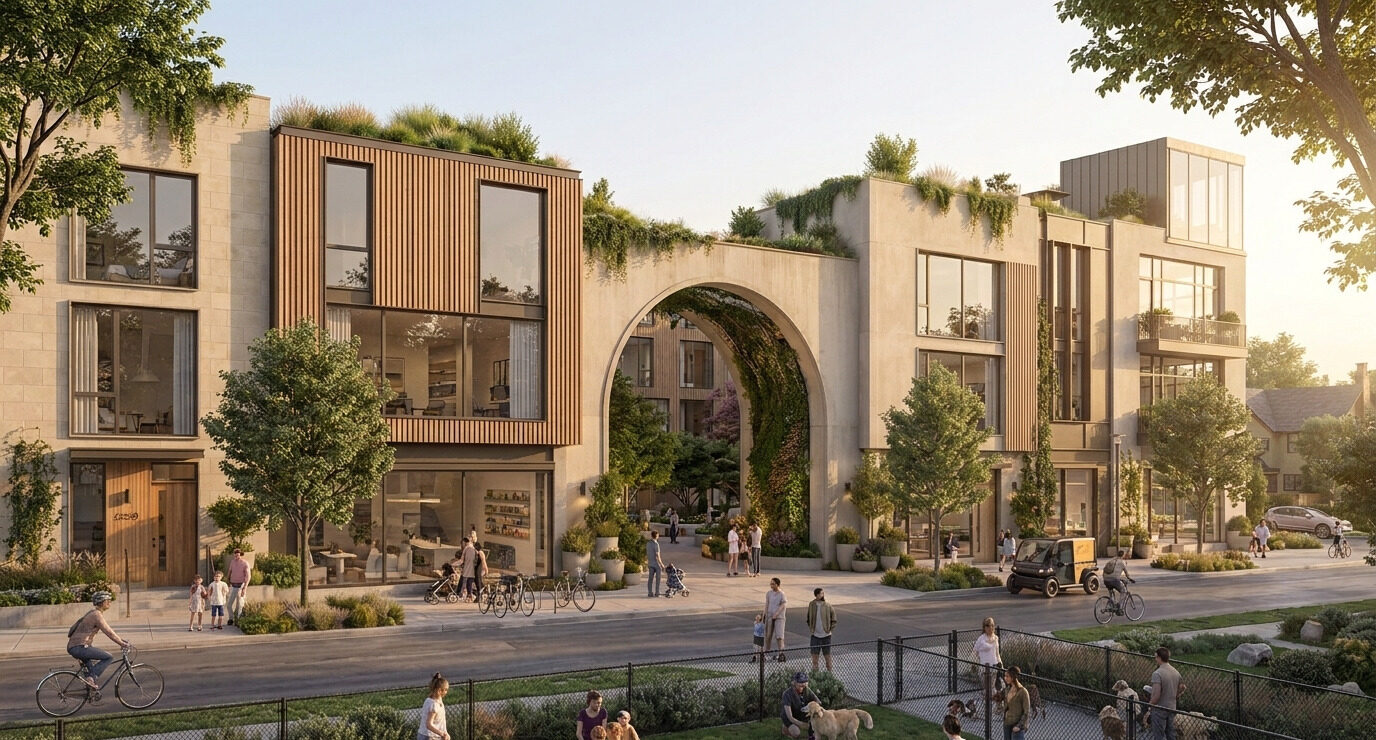
Now City Homes is our strategy to become that anchor buyer for the private, regenerative market on the West Coast. We aggregate demand across our own districts and partner pipelines, standardize the product, and deliver it through factory partners. The pipeline creates the certainty; the certainty creates the economics.
Now City Homes street render: one chassis, contextual expression
Now City Homes
Standardized chassis. Localized soul.

One chassis, a full catalog of neighborhoods

The shell, core, structure, and factory tooling stay constant. Only the interior mix and the exterior expression change. A standardized core delivers the cost, schedule, and quality; the contextual skin means standardization never means sameness.
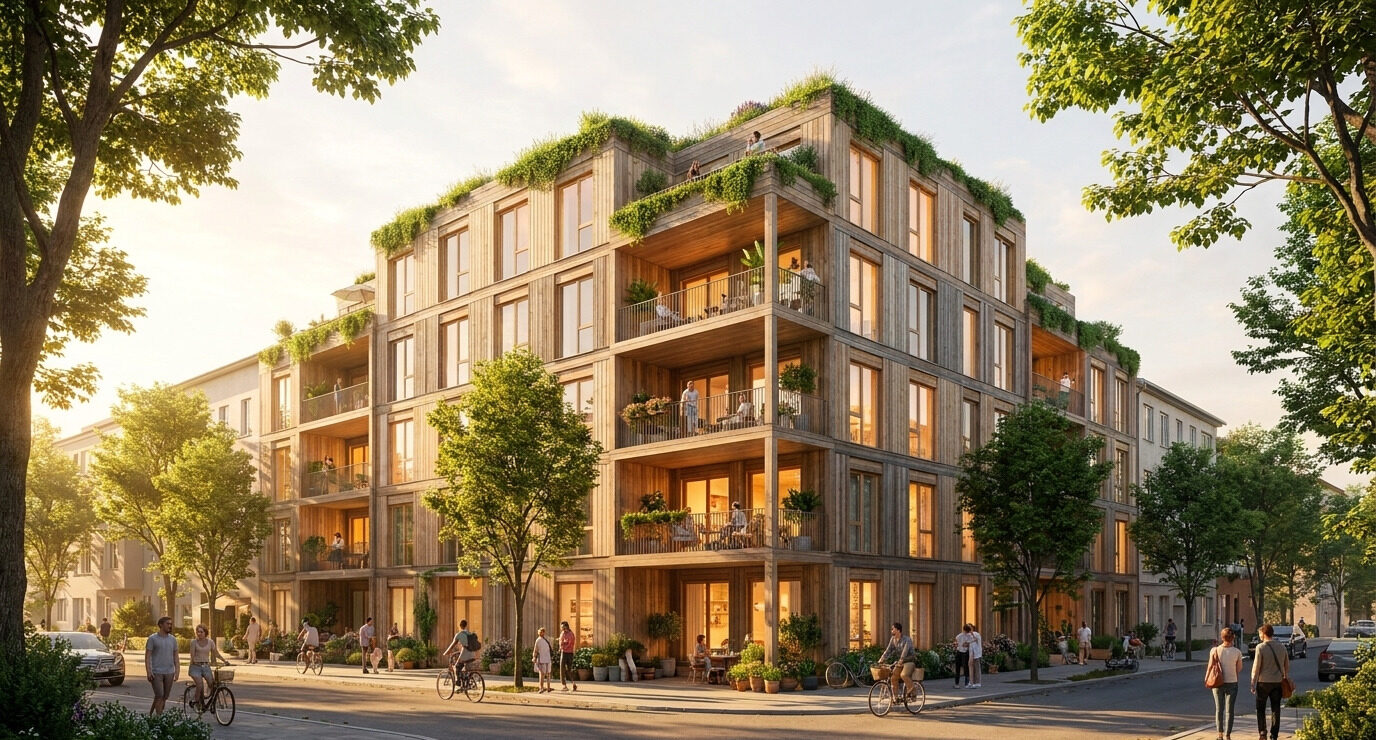
Now City Block street corner render
Typology 01 · The Hero Chassis

The Now City Block

A standardized single-stair mid-rise that flexes its interior mix, from compact homes for students and seniors to 3- and 4-bedroom family units, without changing the shell, core, or tooling. Stands alone or chains into a 4-to-6-story courtyard block.
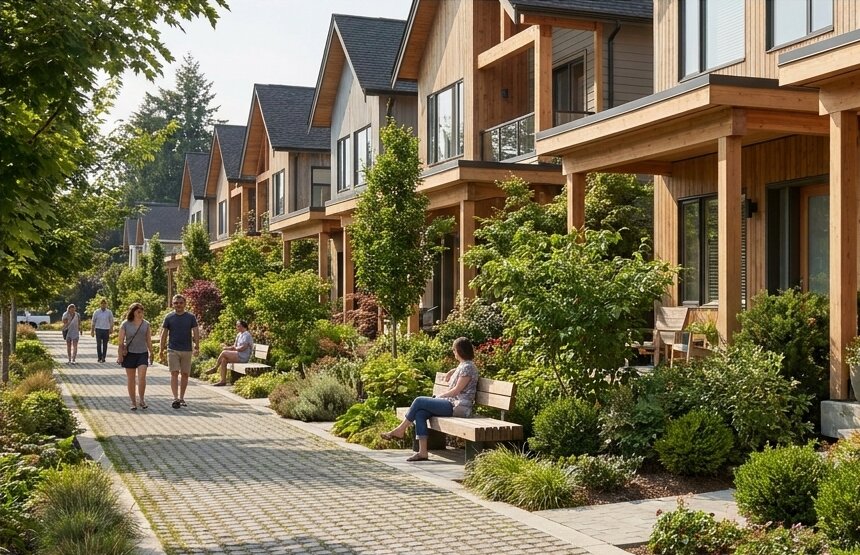
Now City Row Houses render
Typology 02 · Missing Middle

Now City Row Houses

A door-on-the-street typology for the peri-urban edge, with an integrated ground-floor ADU and separate entrance for multigenerational living, supplemental income, or aging in place. The same envelope and delivery system, reformatted.
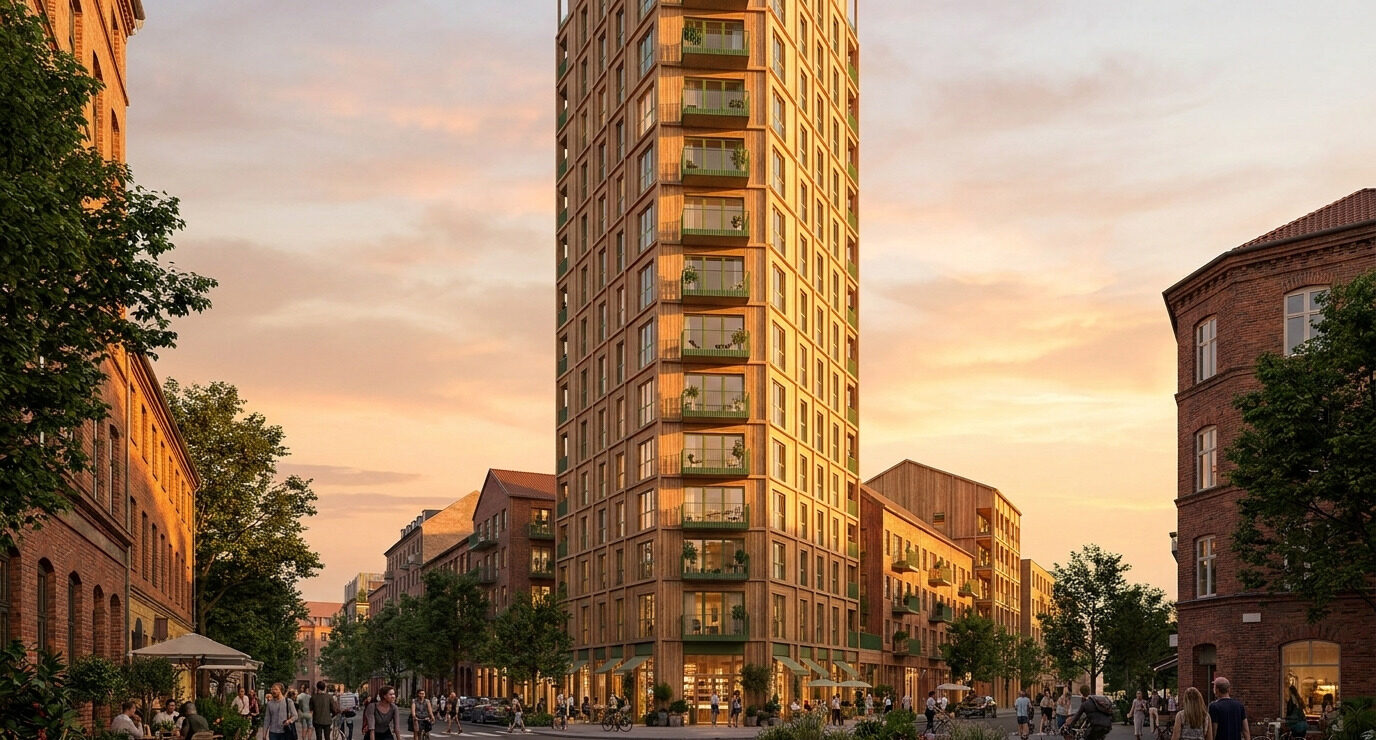
Contextual urban tower at dusk among low-rise neighbors
Typology 03 · The Density Anchor

Contextual Urban Tower

Targeted height where a district needs it, sited to protect neighborhood light and views, never tower-next-to-tower. Shared social floors interweave the vertical stack so density scales without isolation.

The core unlock: the single-stair building

The Point Access Block is the fundamental building block of successful cities worldwide, and it is precisely what factories want to build: a standardized core, narrow repeatable modules, and minimal circulation. Within Now City Homes it is the hero chassis, one part of a larger system.

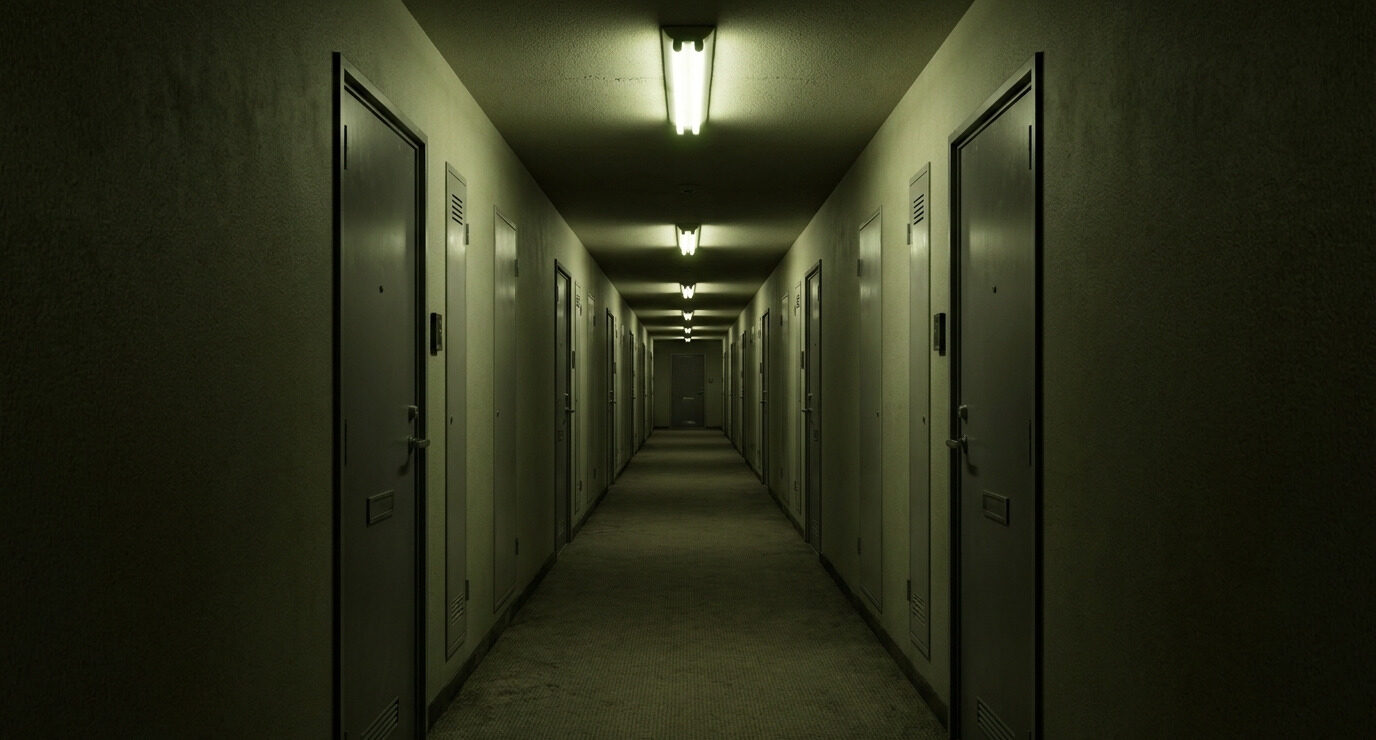
Double-loaded corridor

CORRIDOR
~13% lost to circulation
Single-aspect units, dark internal corridors, and a geometry hostile to modular repetition.

Point Access Block · the Now City chassis
STAIR + ELEVATOR
~6.5% circulation · 93% efficient plates
Corner and through-units with daylight and cross-ventilation on two sides, family-sized flexibility, and the efficient plate that gives the ground back to courtyards.
Double-loaded corridor interior
What the industry default buys: a windowless tube of doors on every floor, on every project.
Daylit single-stair core with landscape view
What the same square footage buys in the Now City chassis: a daylit stair with a view, two flights to your door.

The regulatory window is open now

The same standardized, code-tested building can be deployed across an expanding set of West Coast jurisdictions today. First movers capture the arbitrage.

Seattle

Six-story single-stair buildings permitted since 1977, with a safety record exceeding national averages.

Washington State

Single-stair legalized statewide (SB 5491, 2023), extended in 2026 with elevator and scissor-stair reform that further reduces core costs.

Oregon · the immediate play

Four-story single-stair permitted today as a clear and objective right, with the enhanced life-safety tier unlocking 5-6 stories and roughly 25% more density.

California · opening

Statewide single-stair reform in motion, with State Fire Marshal recommendations delivered to the legislature in 2026. The catalog is ready for the market's largest state.
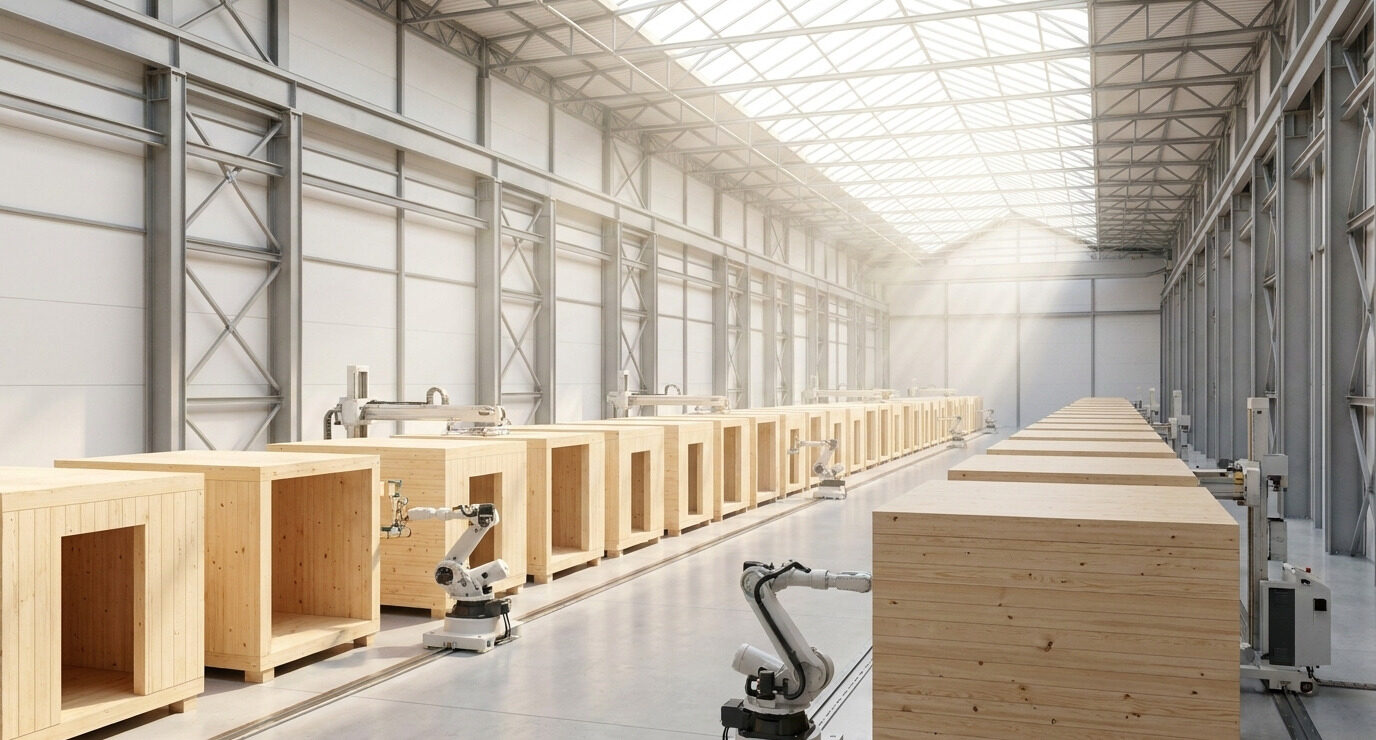
Industrialized timber construction line
Asset-light by design

We are not building a factory. We are orchestrating a partnership stack.

Delivery runs through an established industrialized construction partner in the Western U.S. with a patented building system, supported by a network of timber, logistics, and manufacturing relationships. Zero capital drain on proprietary factories, geographic flexibility to deploy the chassis where fundamentals are strongest, and a supply chain insulated from localized labor shortages.
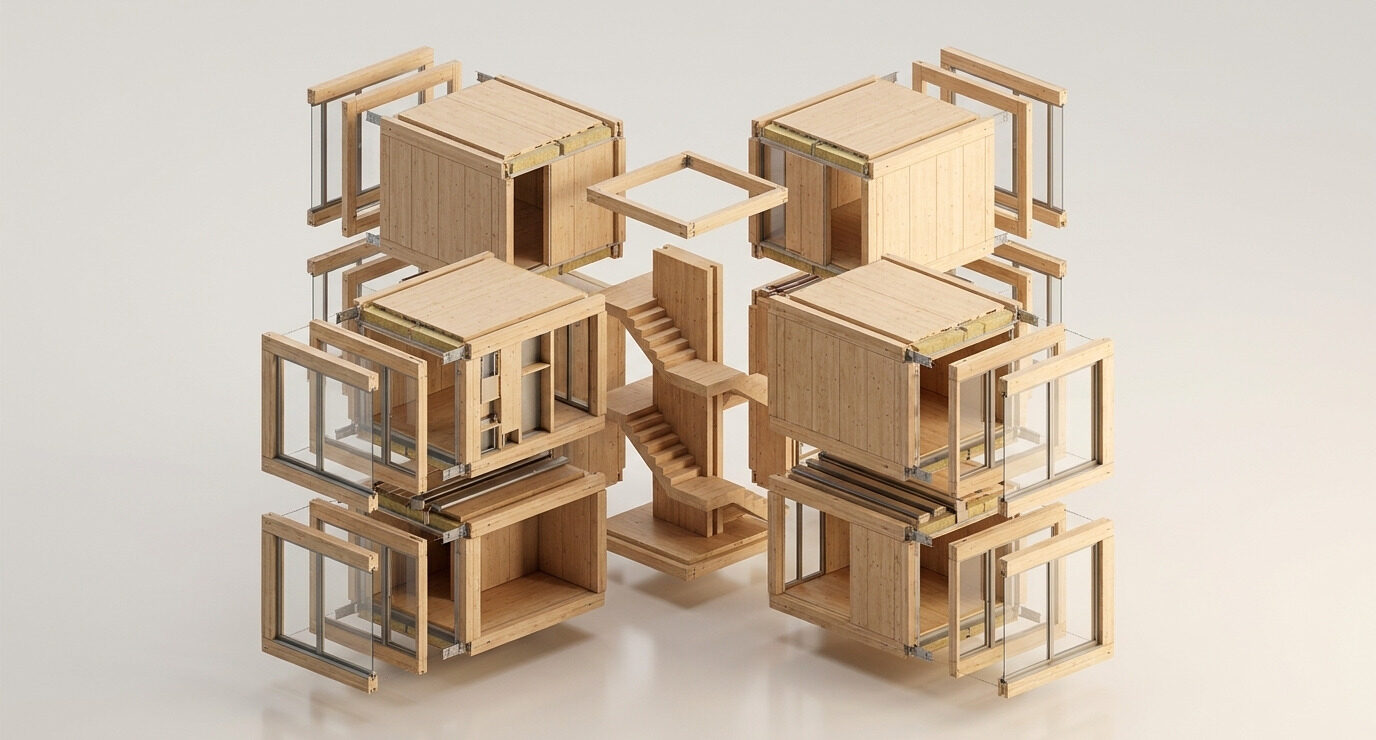
The standardized chassis as a kit of parts
Performance + intelligence

Engineer once. Replicate everywhere. Compound the learning.

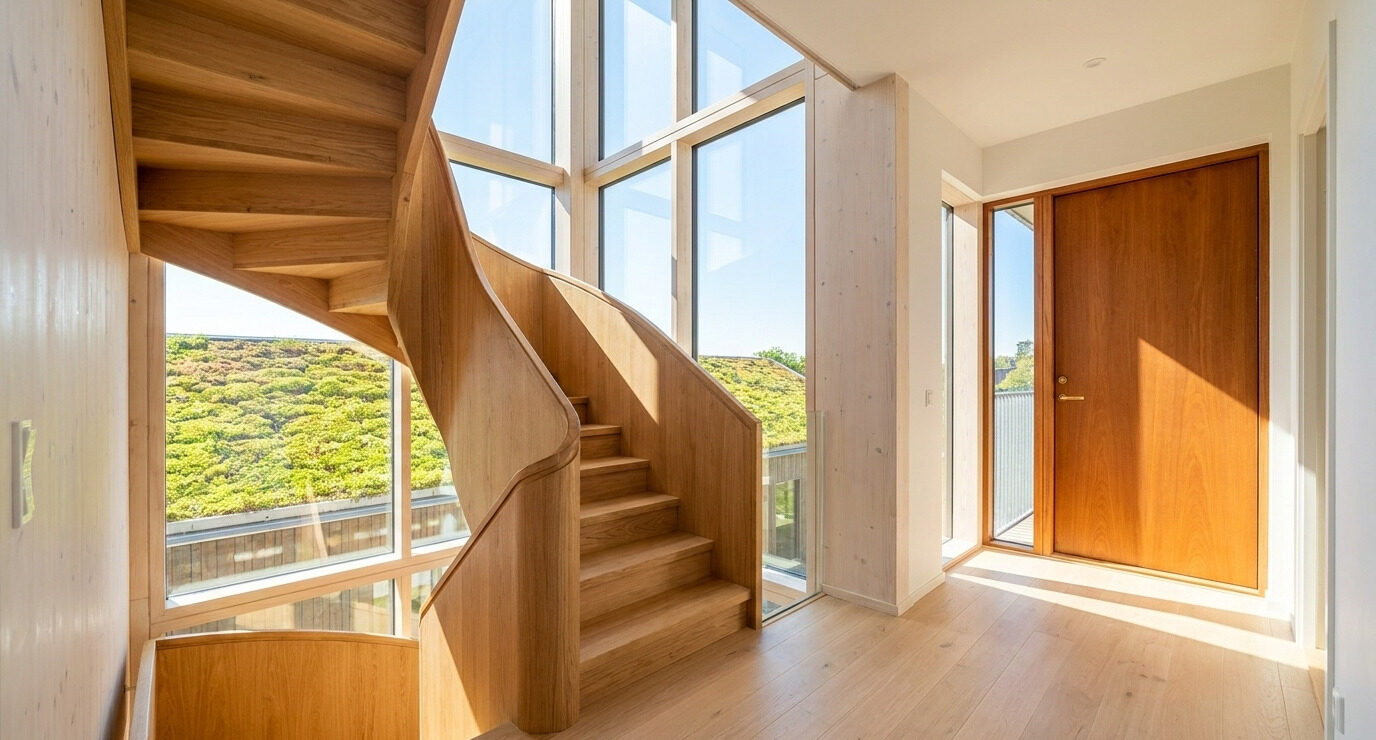
Passive House-level envelopes, low embodied and operational carbon, and healthy cross-ventilated homes come by default, because performance is engineered into the chassis once. And because the product repeats, every deployment feeds the platform's AI-assisted optimization, from unit mix and daylighting to factory-load scheduling, with human review non-negotiable. The building system and the software system are the same flywheel.

03bThe Order Book

Demand certainty is manufactured. We build it four ways at once.

A factory believes an order book, not a vision. Now City builds one the way an airline fills a route: a committed base load it controls, anchor customers on framework agreements, a distribution channel that converts continuously, and chartered volume from partners who need thousands of units on committed schedules.

1 · The base load we control

Edgewater's ~1,000 homes across four phases, specified, sequenced, and scheduled by the master developer itself. Every district the platform wins adds a thousand-home block to the book. No sales cycle stands between the platform and its own demand.

2 · Anchor customers on framework terms

The Kombohus move, translated to the West Coast: cities, housing authorities, universities, and employers adopt a pre-engineered, pre-priced catalog under framework agreements, aggregating many small public buyers into one order. The coalition method is already opening these doors district by district.

3 · The underwriting channel

Every external deal team on the Upside Explorer is a qualified buyer in formation: the software proves, in their own numbers, that the chassis is the move that makes their project pencil, then routes the order to the catalog. Distribution for the software is aggregation for the factory.

4 · Chartered pipeline volume

Framework supply agreements with West Coast transit-oriented developments and large master-planned communities: buyers who need thousands of standardized, high-performance units on committed schedules, and who gain factory economics they could never aggregate alone.

Why the book converts: the catalog arrives pre-engineered (the Passive House chassis), pre-approved (code-tested jurisdiction by jurisdiction), pre-priced (framework factory terms), and pre-proven (every delivered building becomes the comp that sells the next order). Buyers commit to certainty, and certainty is the product.
✓ Cleared by the book

Scale

A pipeline measured in districts and framework agreements, not one-off projects.

✓ Cleared by the chassis

Repeatability

One standardized core and catalog across every order in the book.

✓ Cleared by the market

Schedule pressure

High-carry environments where months saved convert directly to returns.

✓ Cleared by geography

High-cost labor

West Coast coastal cities, where factory labor arbitrage is deepest.

The platform is paid three ways on the same order book: as developer of its own districts, as product owner on catalog deployments, and as the intelligence layer across the pipeline. Factories get the growth and stability they have never had; buyers get homes that pencil; the platform owns the demand.
04The Market

A large market, a focused wedge, an honest share

The market sizing below is stated the way we underwrite: anchored to public data where it exists, and labeled as assumption where it is ours.

TAM · U.S. multifamily development
~$115B per year
Annual private multifamily construction put in place1, against a national shortage of roughly 4 million homes2. The structural demand backdrop for the next several decades.
SAM · The West Coast wedge
~$20-25B per year
West Coast multifamily development (WA, OR, CA, ~20% of national activity3), where the single-stair regulatory window, high-cost labor, and in-migration make the Now City Homes catalog most valuable: mid-rise, walkable, attainable product in supply-starved markets.
SOM · The 10-year platform objective
~$250M per year by year 10
Three to five Now City districts in delivery ($2-3B cumulative pipeline, Edgewater's $650M first) plus Now City Homes units delivered into partner TOD and master-plan pipelines. Roughly 1% of the serviceable market4.

1 U.S. Census Bureau, value of private multifamily residential construction put in place, seasonally adjusted annual rate, 2025-2026 releases.  2 Estimates range from ~3.8M (Up For Growth, 2025) to ~4.7M (Zillow); we use ~4M as the consensus center.  3 Company assumption based on historical West Coast share of national multifamily permitting; stated as assumption, not measurement.  4 Company objective, not a forecast: depends on Edgewater execution, district two timing, and partner pipeline conversion. All figures for discussion purposes only.

05Proof, Not Promise

Edgewater: the first district is already moving

Edgewater is a ~22-acre riverfront district in West Salem, Oregon: roughly 1,000 homes, retail, wellness, and an innovation anchor, phased over eight years. Now City is its master developer, and Now City Homes is its building system.

~22 acres
Willamette riverfront district, assembled from a rezoned corridor
$650M
Development pipeline unlocked across four phases
~$1.0B
Stabilized asset value at completion, held long-term
1,000
Homes, priced to local incomes, first phases targeting 2029
Site control

Signed LOI, landowner invested

Phase One land under a signed letter of intent, with the landowner contributing $5M of land value as foundational equity.

Entitlement

Rezoned, OZ verified

Corridor rezoned high-density mixed-use (2022), much of the program by-right, inside an Urban Renewal Area with Opportunity Zone status verified.

Capital

$12M district fund raising

The companion District Value Creation Fund is raising alongside this round, with a complete investor data room and live verification register.

Underwriting

Live in the Upside Explorer

An honest base case, 50+ separable levers, every point of upside traced to a named move, open to investor scrutiny.

The complete Edgewater data room, from business plan to live underwriting, is at the Edgewater investor portal.

06The Raise

$3.5M to own the engine

Now City Inc is raising $3.5M of platform equity, one of two vehicles in the $15.5M Phase One Capital Campaign. The companion $12M District Value Creation Fund buys the district's value; the platform raise buys the company that creates it, and that repeats it. The raise is sized to fund all four workstreams honestly, including the order book.

This raise

Now City Inc · $3.5M · C-Corp equity

Ownership of the master developer platform: team, systems, GP economics, Now City Homes, and every district the platform delivers. Venture-style position, 7-10 year horizon, with platform value events along the way.

Companion vehicle

District Value Creation Fund · $12M

Funds Edgewater's site control, entitlements, engineering, and infrastructure planning. First exit window at land close (~$34M Land SPV), 3-5 year horizon. Detailed on the Edgewater portal.

$3.5M
Platform equity sits at the control point of the campaign
$12M
District Value Creation Fund organizes entitlement and engineering
~$34M
Land SPV assembles at close, landowner's $5M committed under the LOI
$650M
Phased development pipeline built on the blended-cost capital stack

$3.5M, deployed against 18 months of execution

Every dollar maps to work that advances Edgewater, prepares district two, hardens the platform's systems, or converts the order book from strategy into signed paper. We sized the raise to the work rather than trimming the work to a round number: chartered volume does not happen on a zero budget, so it has its own line.

AllocationAmount
Team & operating runway
Core team compensation and operations through Edgewater's capitalization milestones
$1.0M
Master planning & site evaluation
Edgewater master plan advancement plus screening of the second district
$0.7M
Business development & IR
Capital formation for the campaign and the phase capitalizations that follow
$0.65M
Product & order book · Now City Homes
Catalog schematic package and Passive House chassis engineering (~$250K), jurisdiction code-pathway packages for Oregon and Washington (~$100K), factory framework agreement diligence and legal (~$75K), and anchor-buyer partnership development (~$75K)
$0.5M
Legal, community, contingency
Entity and offering work, community engagement, and reserve
$0.65M
Total platform raise$3.5M
The honest read on chartered volume. Framework agreements with TODs and master-planned communities are 12-to-24-month sales cycles with sophisticated counterparties, and they sign against artifacts, not intentions. The $0.5M product line buys the four artifacts that make signature possible: an engineered catalog, code-approved pathways, committed factory terms, and a delivered first order at Edgewater. Until those exist, chartered volume is a pipeline, and we will report it as one.

Months 0-6

Lock the foundations

Platform round closed or substantially subscribed; District Fund raising in parallel. HUD lender interviews complete, C-PACE and URA diligence closed, predevelopment credit term sheet in hand. Order book: catalog schematic package commissioned and factory framework term sheet in negotiation. Tracked publicly on the capital strategy verification register.

Months 6-12

Convert control into value

Edgewater master plan and engineering advancing on the District Fund's capital; TIF concept submitted; district two shortlist evaluated on the underwriting engine; Upside Explorer in the hands of first external deal teams. Order book: Oregon and Washington code-pathway packages complete, first anchor-customer framework LOI in hand.

Months 12-18

Switch on platform economics

The ~$34M Land SPV assembled; Phase 1 capitalization in processing across HUD, C-PACE, TIF, and OZ equity; recurring fee agreements in place, moving the platform from raise-funded to fee-supported operations. Order book: Edgewater Phase 1 order specified with the factory partner, and at least two external framework LOIs in diligence.

What the engine earns: fee revenue, projected honestly

The projection below is built from the Edgewater master developer pro forma, then repeated. A district pays the platform three ways long before promote: a $2.5M development management agreement across five pre-construction milestones, a $300K annual master developer advance, and master developer plus development fees that balloon as each phase entitles and capitalizes. Edgewater alone models ~$39M of fee revenue across 2026-2035. The platform intends to help kick off 10+ new projects over the next ten years: three to four as full master developer on the Edgewater template, and six to eight as advisory kickoffs where the services practice and the software earn fees without balance-sheet weight.

$0.5M
2026
$2.4M
2027
$12.6M
2028
$1.7M
2029
$9.7M
2030
$13.9M
2031
$11.1M
2032
$20.5M
2033
$12.5M
2034
$27.7M
2035
Edgewater fees (modeled: ~$39M) Districts 2-4 on the Edgewater template (~$65M) Advisory kickoffs & services practice (~$8M)
~$112M
Cumulative platform fee revenue by 2035 across the projection
10+
Projects kicked off in ten years: 4 owned districts, 6-8 advisory engagements
<24 mo
A new district writes its first checks: DMA milestones and the annual advance start pre-construction
+ promote
Fees shown exclude promote, carried interest, and co-investment appreciation, which are additional

Assumptions, stated plainly: Edgewater's bars come from the 14 July 2026 master developer pro forma (fee revenue only, before platform operating costs). Districts 2-4 assume the Edgewater fee template repeats with starts in 2029, 2031, and 2033; no two districts will be identical, and later districts' largest fee years fall beyond this window. Advisory revenue assumes a services practice ramping from one engagement in 2027 to roughly three concurrent engagements at ~$350K each per year. Fee timing follows entitlement and capitalization milestones and will be lumpy in exactly the way the bars are. This is a projection for discussion, not a forecast.

What platform investors own: the GP economics (fees, promote, carried interest) on every district; the platform's co-investment positions; the systems (Upside Explorer, Now City Homes, the capital playbook); and the pipeline, every district after the first. On terms: this preview describes structure, use of funds, and milestones. Valuation and instrument mechanics are shared in conversation.
07Honest Questions

The questions we would ask before writing this check

We would rather earn trust than manage impressions. Direct answers, with the risk we are still working named alongside each.

Concentration

"Is this just a bet on one project in Salem?"

Today, Edgewater is the platform's main engine, and this raise is sized to its milestones. The position you buy is broader: Now City Homes and the software have their own commercial paths, the second district search is funded in this budget, and the playbook is the durable asset. The risk we are working: near-term value does concentrate in Edgewater's progress; the milestone ladder converts that concentration into proof quickly.

The Katerra question

"Didn't industrialized construction already fail?"

Capital-first modular failed; demand-first modular works, from Sweden's Kombohus to the DoD's current program. Now City Homes is demand-first by construction: the anchor pipeline exists before factory commitments, and delivery runs through established factory partners with zero proprietary factory CapEx. The risk we are working: partner capacity and pipeline conversion are execution work, and we treat them as such.

Stage

"Why equity in a young company instead of the district fund?"

Different jobs. The fund buys a defined value-creation arc with an exit window at land close. Platform equity buys the repeating engine: GP economics, the product, the software, and every future district, with more time and more variance. Many partners take both; the campaign is designed so the two reinforce each other.

Revenue

"When does the platform earn money?"

Earlier than most expect, and lumpier than most like. The development management agreement pays $2.5M across five pre-construction milestones and a $300K annual advance starts in year two, so a district writes checks inside 24 months; master developer and development fees then balloon as phases entitle and capitalize. The full projection, built from the Edgewater pro forma and repeated across the pipeline, is charted above. The risk we are working: fee timing follows milestone timing; the 18-month plan reaches fee-supported operations inside this raise's runway.

08Team & Traction

Built around the work

Two founders, one synthesis: the operating reality of property combined with the systems discipline of technology. A senior bench that is load-bearing, not decorative. And a lean operating model whose leverage comes from systems and coalitions.

Co-Founder & CEO

Erik Gillberg

Thirty years inside the operating reality of property, alongside a 20-year career in technology, business development, and startup leadership. As master developer of Edgewater, Erik's role is holding the whole: a vision worth committing a decade to, capital structures that let attainable homes pencil, and partnerships aligned enough to survive four phases of delivery.

Co-Founder & COO

Ritchie Ju

Leads design, development, and operations. B.Arch from Carnegie Mellon, MS in Architecture and Urban Design from Columbia, MBA in progress at Johns Hopkins. His career spans Citi Bike's expansion at Lyft, capital raising and development with a $3B+ NYC mixed-use developer, and co-founding a 7-figure ecommerce business.

Advisor · Local Economies

Michael H. Shuman

Economist, attorney, and one of the architects of the 2012 JOBS Act. He advises Now City on community-rooted ownership, local capital formation, and finance models that keep wealth in place.

Advisor · Urban Planning & Design

Neal Payton

FAIA, FCNU. Directs the western U.S. urban and architectural design practice at Torti Gallas. He advises Now City on urbanism, master planning, and entitlement strategy.

Traction

What exists today

Signed LOI with $5M landowner equity, rezoned corridor, verified OZ status, a raising district fund, live comp-grounded underwriting, a productized software engine, a named coalition map, and a ULI Technical Advisory Panel foundation. Nearly every item links to a live document in the Edgewater data room.

Operating model

A small core, a scaling bench

Early phases executed with experienced local and regional teams; Now City maintains continuity of vision, performance standards, and long-term district control. Payroll stays small while the platform's reach compounds.

The Invitation

Build the company
that builds districts.

The platform raise is open now. Start with a conversation, and bring your hardest questions; the data room is built for them.

All projections are based on assumptions regarding revenues and costs that may not equate to actual results; actual results will differ and may differ materially. Prospective investors, with their financial and legal advisers, should independently evaluate all assumptions and should not place undue weight on any projections. Market sizing figures are estimates based on third-party data and company assumptions and are provided for discussion purposes only. This site does not constitute an offer to buy or sell securities; an offering can be made only pursuant to delivery of definitive offering documents. Any securities would be offered in reliance on exemptions from registration and only to persons meeting applicable requirements. Statements herein may constitute forward-looking statements involving known and unknown risks and uncertainties; no representation is made that objectives will be achieved, and Now City undertakes no obligation to update such statements. This material is confidential, furnished solely for consideration of the matters described, and is not to be copied or shared without written consent.